

Become a Machinist
Interested in repairing the mechanical devices that keep industries running?
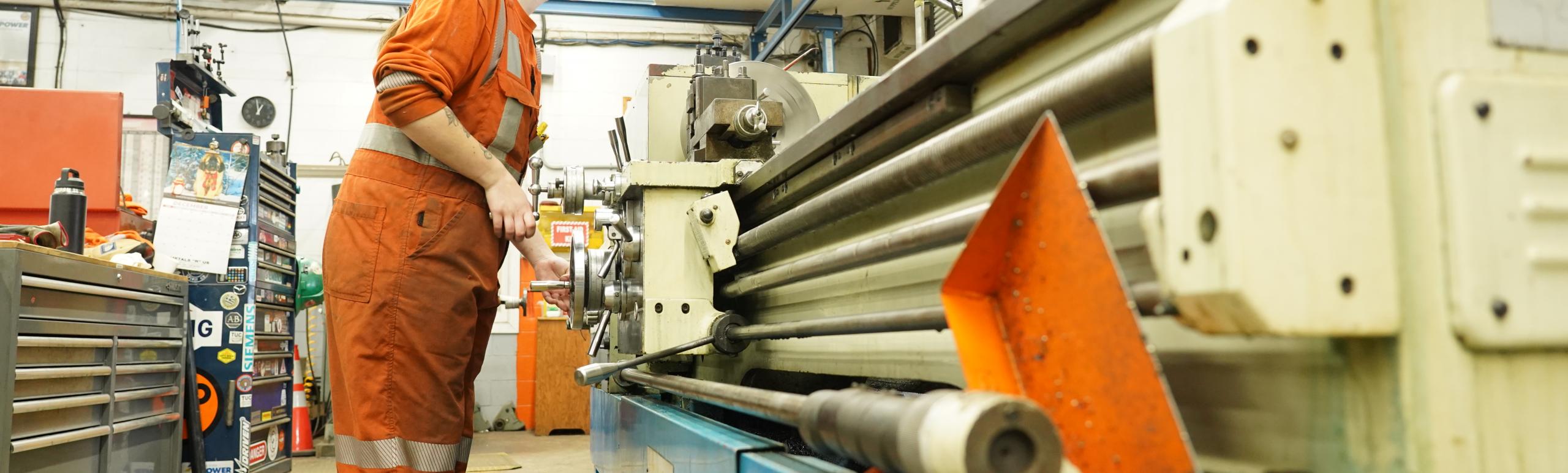
A Machinist manufactures and repairs industrial components and mechanical devices by using a variety of metal-cutting and shaping machinery.

Key Skills Needed
- Mechanical aptitude
- Math and computer skills
- Comfort working with machinery
- Precision measuring ability
- Good hand-eye coordination
- Critical thinking and problem-solving ability

Watch Mollie share what a typical day looks like in the shop, from reading technical drawings to setting up and operating machines that shape metal parts. Mollie talks about the parts of the job people may not expect, including how much planning and math are involved.

Typical Mid-Range Hourly Rate
31
Career Outlook
Good - The odds of finding work in this field are good for someone who is qualified.

Pathways Into the Trade
- Direct Entry
Start working with a certified journeyperson and begin your apprenticeship right away - no experience needed. Most apprentices spend about 80% of their time on the job and 20% in training. - Pre-Apprenticeship
Take a program at a college or training institution to build foundational skills before starting your apprenticeship. - Trade Experience
If you already have experience – whether in Canada or internationally – you may be able to challenge the trade qualifier exam and become certified.

Working Conditions
- Work in manufacturing and machine shops
- Use computer-controlled machines and conventional machine tools
- Shops can be noisy, dusty and involve oils and chemicals
- Standing for long periods is common
- Hazards include moving machinery, sharp metals and heavy lifting

*Profile data compiled by Labour, Skills and Immigration – AskLMI@novascotia.ca