

Gasfitter - Class A
Design, install, test, adjust, maintain, and repair fuel piping systems, venting, air supply systems, and appliances.
Gasfitters – Class A design, install, test, adjust, maintain, and repair fuel piping systems, venting, air supply systems, appliances, equipment and accessories in various sectors. They may work in residential, manufacturing, industrial, commercial, and institutional (ICI) sectors where large fuel-fired appliances and equipment are encountered.
Gasfitter - Class A work on appliances and equipment including those exceeding 400,000 British Thermal Units per hour (Btuhs) or 120 kilowatts (kW)

- Mechanical aptitude
- Electrical and electronic aptitude
- Problem-solving skills
- Good hand-eye coordination
- Attention to detail
- Safety awareness

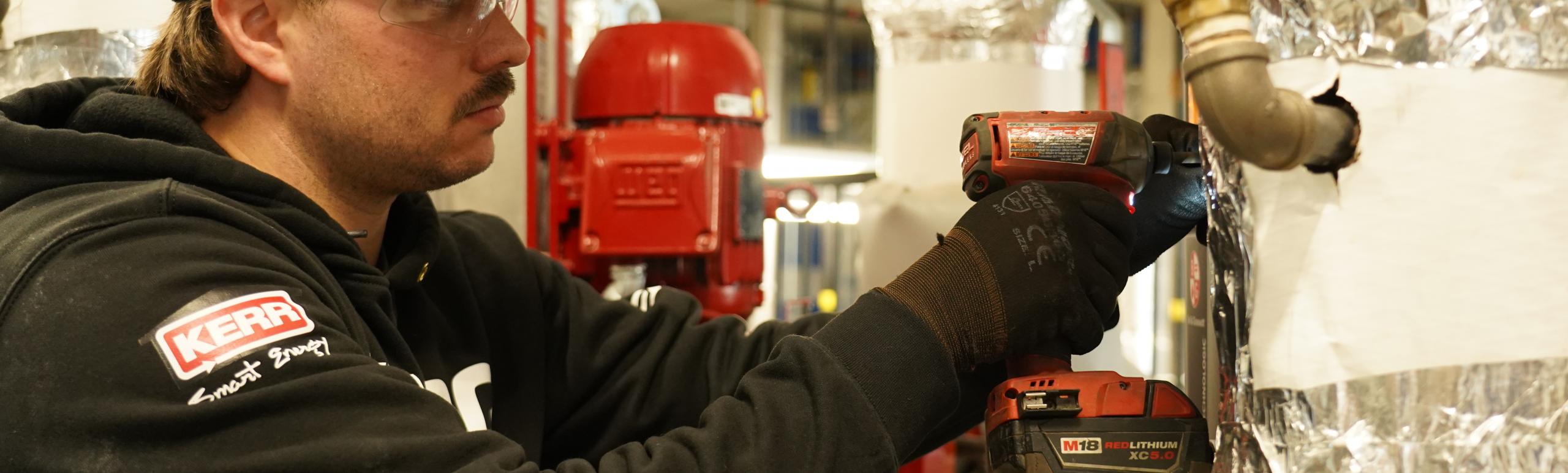
Watch Kyle as he shares what a typical day looks like as a Gas Fitter and talks about the parts of the job people may not know, and why safety, precision, and attention to detail are key to doing the job well.


- Direct Entry
Start working with a certified journeyperson and begin your apprenticeship right away - no experience needed. Most apprentices spend about 80% of their time on the job and 20% in training. - Pre-Apprenticeship
Take a program at a college or training institution to build foundational skills before starting your apprenticeship. - Trade Experience
If you already have experience – whether in Canada or internationally – you may be able to challenge the trade qualifier exam and become certified.

- Work indoors and outdoors in all weather conditions
- Construction sites, commercial buildings and industrial facilities
- Work in tight spaces and awkward positions at times
- Regular use of testing equipment, power tools and diagnostic devices
- Physical work involving lifting, climbing and carrying materials
- Hazards include gas systems, power tools and live equipment
- Follow safety procedures

*Profile data compiled by Labour, Skills and Immigration – AskLMI@novascotia.ca