

Become an Auto Body and Collison Technician
An Auto Body and Collision Technician repairs, restores and replaces damaged body parts.
This can include parts like glass, trim, steering, and suspension. Responsibilities may include assessing the degree of damage to a vehicle and estimate the cost of parts and labour. They are employed by automobile dealerships, automobile body repair shops, automobile appraisal centres and by motor vehicle manufacturers.

- Mechanical understanding
- Attention to detail
- Problem-solving skills
- Hand-eye coordination
- Math and measuring skills
- Colour matching ability
- Communication and teamwork skills

Meet Tyler, an Auto Body and Collision Technician, and get an inside look at the work that goes into repairing and restoring vehicles.
Watch Tyler as he walks through a typical day in the shop, from fixing collision damage to focusing on the details that ensure every vehicle is safe and road-ready. He talks about the parts of the job people may not expect, the challenges that come with precision repair work, and why problem-solving and attention to detail are so important in this trade.


- Direct Entry
Start working with a certified journeyperson and begin your apprenticeship right away - no experience needed. Most apprentices spend about 80% of their time on the job and 20% in training. - Pre-Apprenticeship
Take a program at a college or training institution to build foundational skills before starting your apprenticeship. - Trade Experience
If you already have experience – whether in Canada or internationally – you may be able to challenge the trade qualifier exam and become certified

- Work indoors in collision repair shops and refinishing facilities
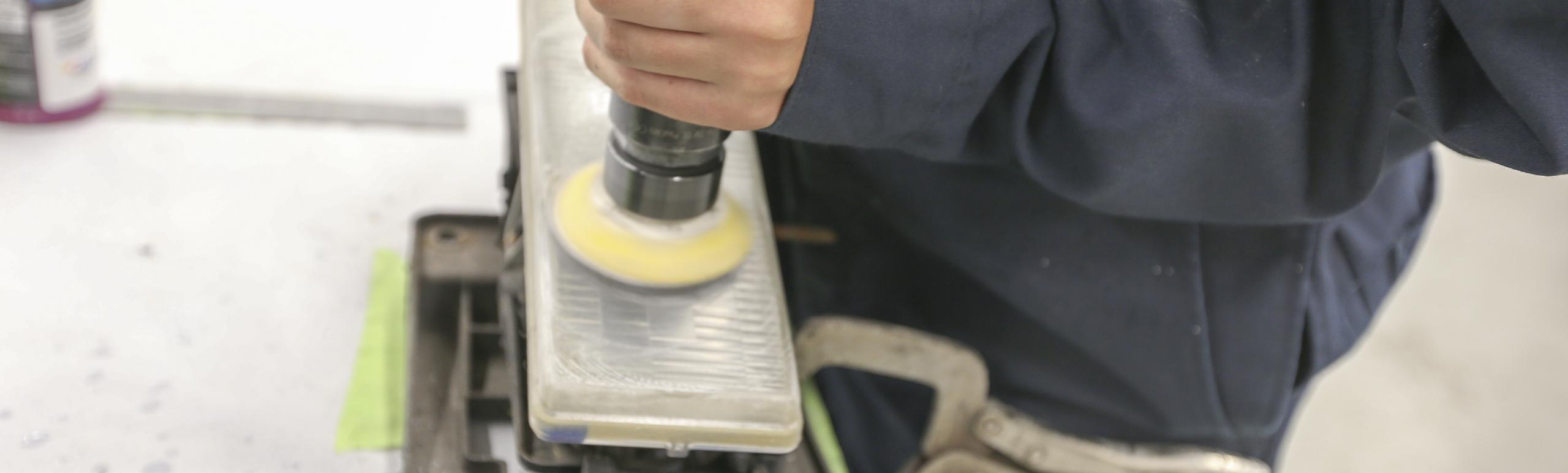
- Use hand tools, power tools, welding equipment, and spray equipment
- Stand for extended periods and work in awkward positions
- Handle metals, plastics, glass, fillers, paints, and repair materials
- Perform physically demanding work involving lifting and moving components
- Exposure to noise, dust, fumes, sharp edges, and shop hazards

*Profile data compiled by Labour, Skills and Immigration – AskLMI@novascotia.ca